1. Project Description & My Goal
Aura is an ambient AI co-pilot for social workers (e.g. Maya in Hong Kong SWD) conducting high-stakes home visits. It tackles post-pandemic challenges: surging caseloads, manual documentation overload, personal safety risks, and burnout (1.7× surge).
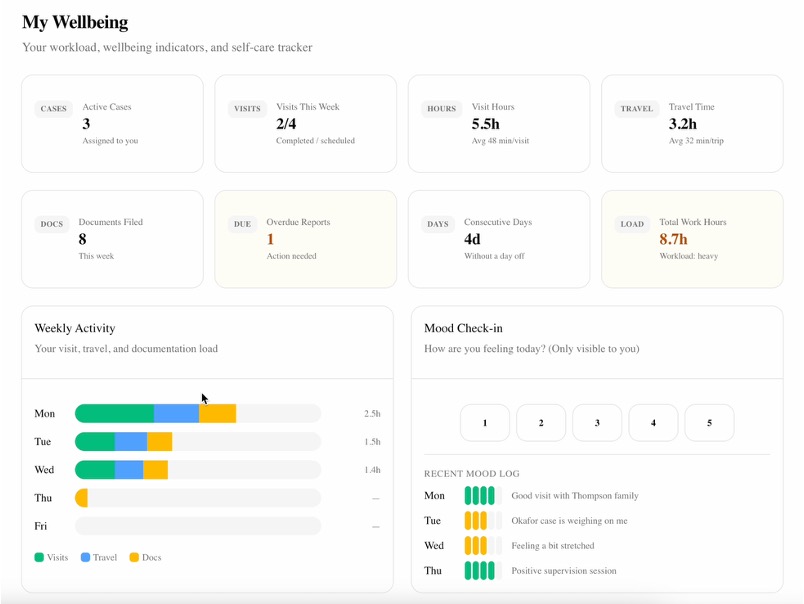
Key features include hands-free ambient narrative capture, visual family ecosystem mapping, explainable AI triage, real-time safety guardian, wellbeing monitoring, and smart planner — all with strict human-in-the-loop control.
"A dedicated social worker needs a way to remain fully present with clients while seamlessly capturing data and ensuring safety, because their current cognitive load leads to burnout."
2. My Responsibilities in the Group & Achievements at Each Milestone
3. My Learning and Execution Process
Needfinding → Solving Real Pain Points
Conducted contextual research and engaged directly with social workers to uncover safety risks, cognitive overload, and admin burden.

Quick Prototyping & Iteration
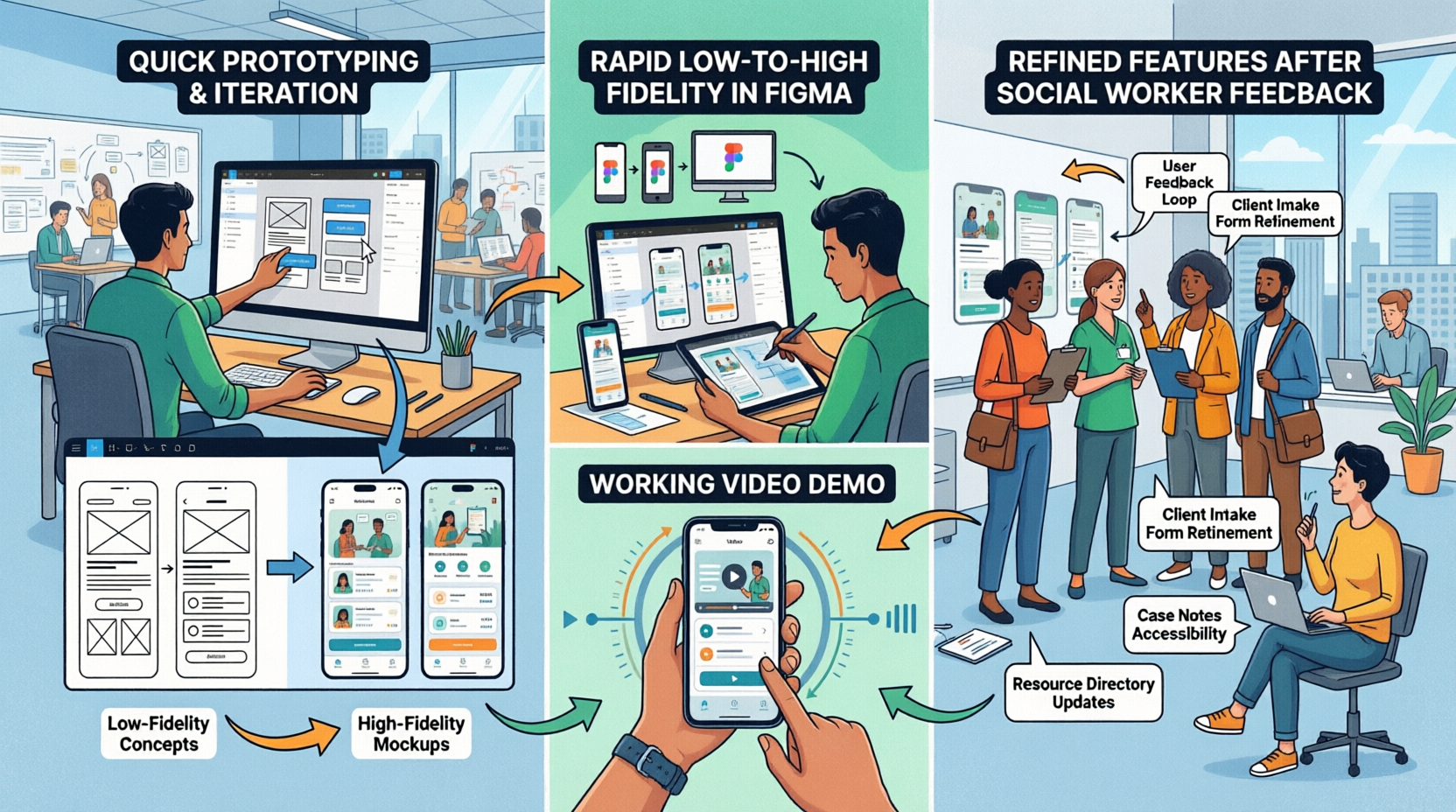
Rapid low-to-high fidelity prototyping in Figma + working video demo. Refined features after every round of feedback from social workers.
Evaluation & Refinement
Conducted speed-dating sessions and expert reviews → iterated on explainable AI and privacy features.
4. Personal Reflection
This project taught me the power of NEEDFINDINGS in the real world. By talking directly to social workers, I learned how to move beyond assumptions and truly solve painful problems like burnout and safety risks.
The **quick prototyping → feedback loop** was the biggest skill I gained. Seeing my initial ideas evolve dramatically after user testing showed me how iteration turns good designs into great ones.
Key lessons learned:
- AI in human services must be ETHICS FIRST — human-in-the-loop and explainable AI are essential.
- Ambient computing dramatically reduces cognitive load and lets practitioners stay present with clients.
- Collaboration and rapid iteration are more important than perfect first drafts.
"Aura reminded me why I love HCI: technology should amplify human connection and compassion, never replace it."
— Nok Chan, May 2026